Solo Dining in Japan: Where It's Brilliant and Where It Gets Complicated
Japan is one of the best countries in the world to eat alone, with some important exceptions
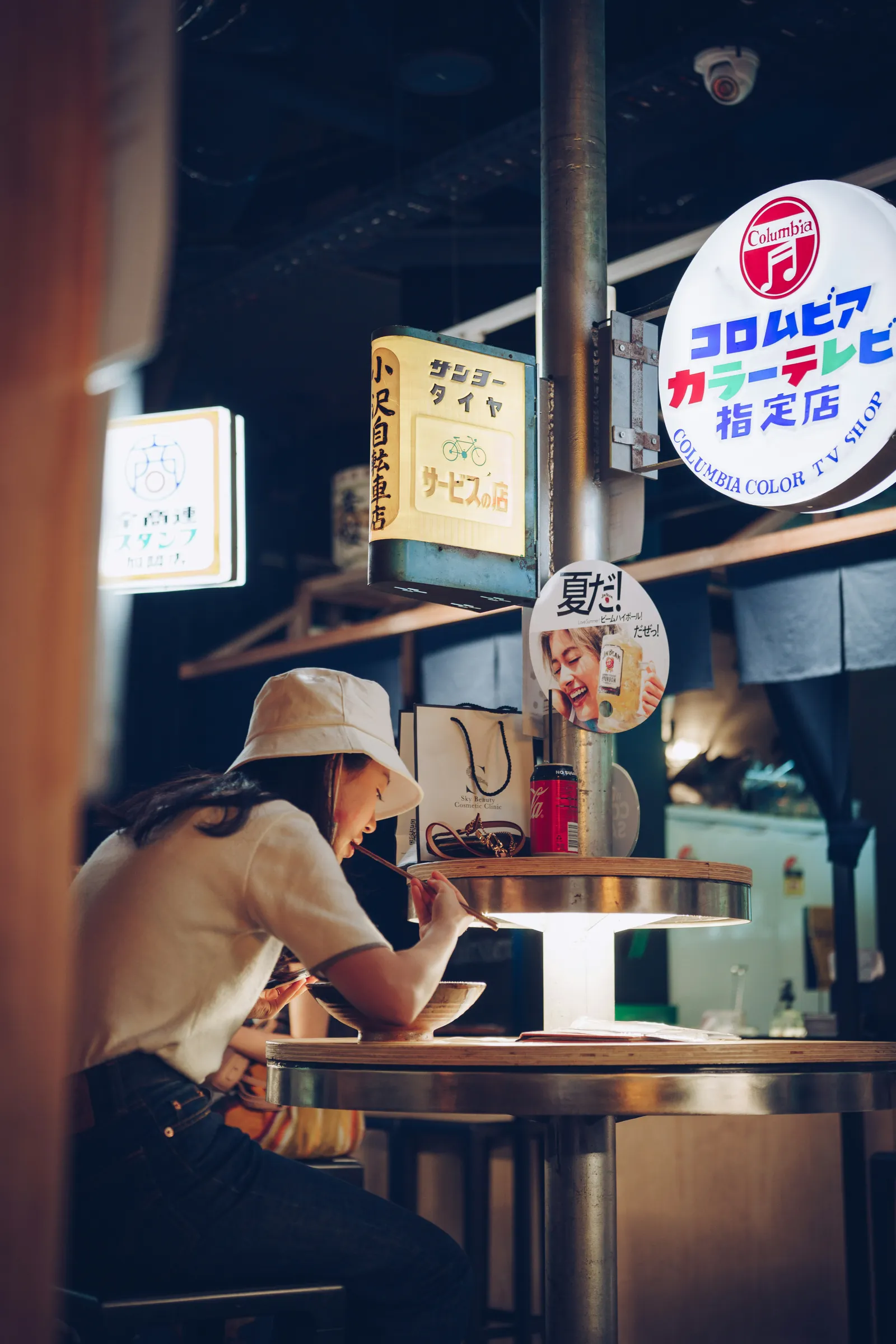
Eating alone in Japan is a different experience than eating alone almost anywhere else. The country has built an entire infrastructure around the solo diner, from ramen counters designed for exactly one person to standing soba bars where the expectation is that you finish in ten minutes and move on. There's no awkward table for two with one chair pushed to the side. Solo dining here is a completely normal way to eat, at most places.
At most places. A meaningful number of the restaurants worth going to in Japan have a minimum party size that makes solo dining difficult or impossible, and understanding which category you're dealing with before making the trip changes how you plan.
Where solo dining is genuinely excellent
Ramen counters are the obvious example. Many of the most celebrated ramen shops in Japan are literally designed as a series of individual seats facing a wall or a counter, with small dividers between them. You order from a ticket machine, you eat alone, and nobody finds this unusual.
Standing soba and udon bars operate on the same logic. Fast, solo, efficient, often genuinely delicious. Some of the best bowls in Tokyo are eaten standing up in a train station.
Conveyor belt sushi, kaiten-zushi, is another format built for the solo diner. Order as much or as little as you want, pay by the plate, leave when you're ready. No minimum order, no social obligation to match someone else's pace.
Many izakaya also seat solo diners comfortably at the counter, especially earlier in the evening. The counter seat at an izakaya is one of the better ways to eat alone in Japan, close enough to the kitchen to see what's being prepared and often an opportunity for quiet back-and-forth with the staff.
Where it gets complicated
Hot pot formats, including shabu-shabu, sukiyaki, and motsunabe, are almost universally designed for groups. The pot is sized for at least two, the ingredients are sold in portions for multiple people, and the experience of a communal hot pot alone is genuinely awkward. A small number of restaurants have introduced individual pot formats for solo diners, but they're the exception.
High-end omakase counters are trickier. Some actively welcome solo diners, and a single seat at a twelve-seat counter can sometimes be booked when nothing else is available. Others have a minimum of two, either for revenue reasons or because the conversation across the counter is calibrated toward groups. It's worth checking before you plan a solo omakase.
Yakiniku, tabletop grilling, is designed around sharing. The experience of ordering a range of cuts and cooking them together is most of the point, and doing it alone is possible but unusual enough that some restaurants will say so politely when you call to book.
Private room dining is the most categorical exception. If a restaurant's reservation system defaults to private rooms, solo diners are almost never accommodated.
The practical move
Before booking any restaurant for a solo visit, checking the minimum party size is worth a phone call. Many restaurants don't list this information in English anywhere, and the answer changes the planning entirely. A restaurant that seats one at the counter is a completely different situation from one that requires a minimum of two for table reservations.
Rapym can make that call in Japanese, confirm whether the restaurant seats solo diners, and book the table if it does. It's a five-minute task that prevents the specific frustration of arriving alone at a restaurant that wasn't set up for it.
Rapym can call any restaurant in Japan on your behalf, in Japanese, to check solo dining availability and book a table. Try it here
Also in this series: Why Tokyo's best restaurants only take phone calls The Japanese Restaurant Rules Nobody Puts in a Guidebook How Far in Advance Do You Actually Need to Book a Restaurant in Japan