How Fukuoka's Yatai Stalls Actually Work
A short guide to the city's open-air food stalls, and why "is it open tonight" is the only question that matters
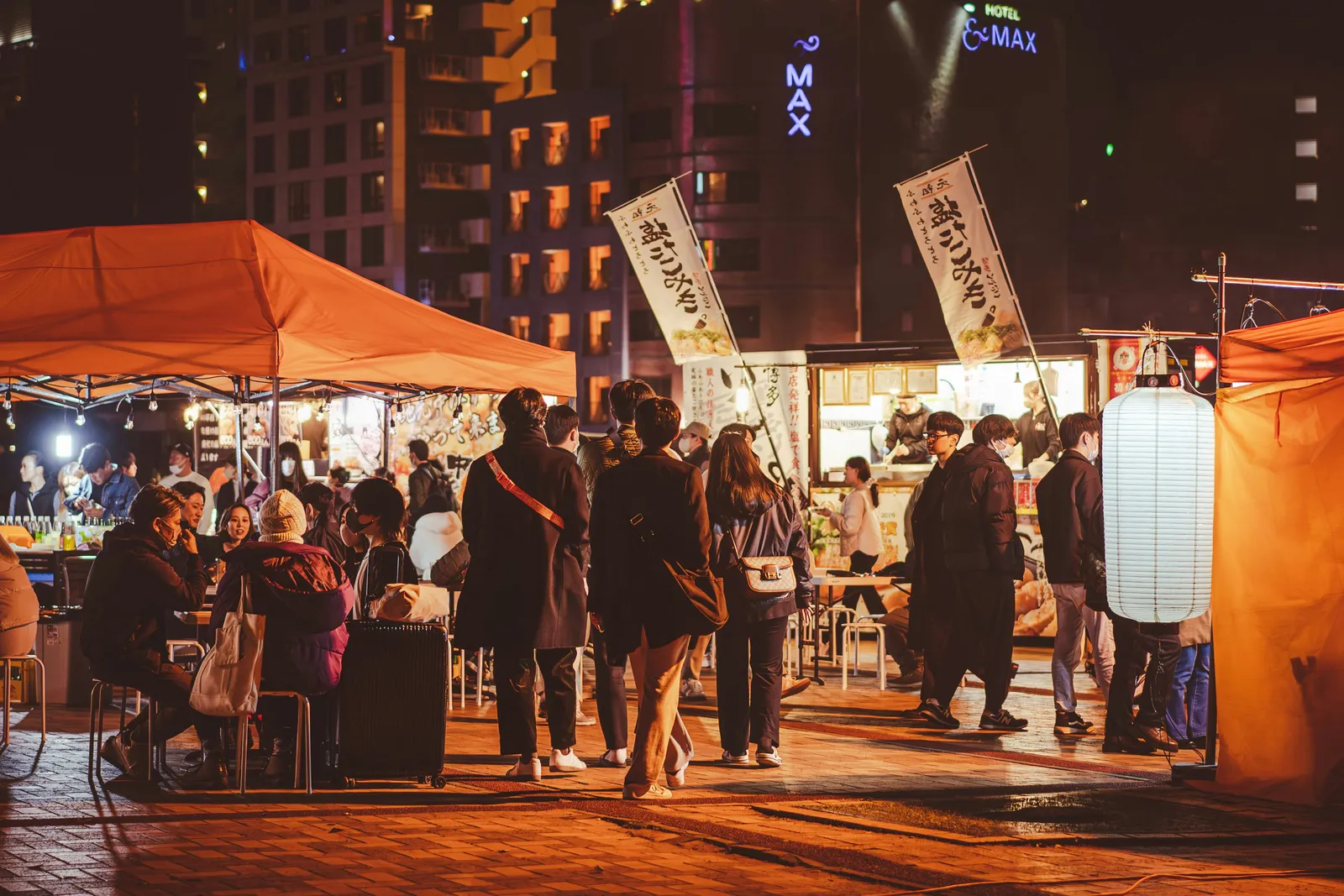
Fukuoka is the last major city in Japan where street food stalls still thrive the way they did decades ago. Around a hundred yatai set up each evening across three main areas, Tenjin, Nakasu, and Nagahama, serving ramen, yakitori, oden, and gyoza to anyone willing to squeeze onto a shared bench. It's one of the most distinctive food experiences in the country, and it runs on rules that don't look like anything else in this series.
There's nothing to reserve
A yatai is a small mobile stall, often seating six to ten people on stools pressed close together. The owner sets up around 5 or 6pm and packs everything away by the early morning, before the sidewalk goes back to being a sidewalk. There's no fixed address in the conventional sense, no phone line dedicated to bookings, and no concept of holding a seat for later. You show up, and if there's room, you sit down.
That's not a quirk of one or two stalls. It's the entire system. Fukuoka's yatai culture survives under a city ordinance that regulates licensing, hygiene, and stall placement, but reservations were never part of the design.
What actually decides whether you get a seat
A few things determine whether a yatai is open and has room on a given night, and none of them are things you can check from a website.
Weather is the biggest one. These are open-air stalls, and a heavy storm can mean a stall simply doesn't set up that night, with no advance notice anywhere.
The owner's schedule matters too. Many yatai are run by one or two people, sometimes a husband and wife team who have worked the same spot for decades. If the owner is sick or needs a night off, the stall doesn't open, full stop.
And then there's simple demand. A well-known yatai in Nakasu on a Friday night might have every seat full with a short line forming, while the same stall on a quiet Tuesday has room to spare.
The honest answer is to just go, but go smart
For most visitors, the right approach to yatai is still to wander Tenjin or Nakasu after dark, see which stalls have open seats, and sit down at whichever one looks good. That's genuinely how most locals do it, and it's part of the charm.
Where it gets harder is when you have a specific yatai in mind, one a friend recommended, one you read about, one with a dish you've been wanting to try, and you don't want to make the trip only to find it closed for the night or already full. That's the one piece of information worth checking ahead of time. Is this particular stall open tonight, and is there room?
Most yatai don't have a phone number to call, which is part of why showing up and looking around stays the default approach. A growing number of stalls do list a phone line, especially the larger or more established ones, and for those, Rapym's "Can I Go?" feature can call ahead in Japanese to check whether the stall is set up that night and how busy it looks. It won't reserve you a seat. Nobody can. But for the yatai that do take calls, it can save you a walk across town to a spot that never opened.
Rapym can check restaurant and food stall availability in Japan on your behalf, by phone, in Japanese. Try it here
Also in this series: The Tokyo Ramen Lines Nobody Warns You About The Michelin Bib Gourmand Restaurants That Won't Take Your Reservation